19/8/2026, 7:22:02 pm
Why Indian real estate is shifting focus from apartments to mega-townships
A key indicator of this shift is the scale of recent land acquisitions across major Indian cities. According to data from real estate consultancy JLL, developers acquired 3,093 acres through 149 transactions worth approximately ₹54,818 crore in 2025. These land parcels are expected to unlock around 229 million square feet of development over the next two to five years, with residential properties accounting for about 78 percent of the planned construction. The momentum has continued into 2026, with nearly 900 acres valued at close to ₹18,000 crore acquired in just the first quarter of the year.
For real estate developers, the township model offers an opportunity to design projects that combine residential units with retail outlets, office spaces, schools, healthcare facilities, hospitality offerings, and recreational infrastructure. This format allows them to spread out infrastructure costs across multiple asset classes, making large projects more viable. For homebuyers, the appeal lies in the convenience and enhanced lifestyle offered by a neighbourhood that integrates essential services, open spaces, and social infrastructure as part of the housing package.
Sparsh Kaul, Vice President–Marketing at Orris Group, noted that the trend mirrors the rapid growth of India’s urban landscape. He explained that as established city centres become more congested, developers and buyers alike are looking for “complete community ecosystems” rather than isolated residential towers.
The pattern of land buying is also shedding light on where developers see the next hubs of urban growth. Akshay Taneja, CEO of TDI Infrastructure, highlighted the move towards city outskirts and emerging infrastructure corridors, where larger parcels are still available at relatively more affordable prices. In the National Capital Region, for example, Sonipat is gaining traction as a potential new growth centre beyond the boundaries of Delhi.
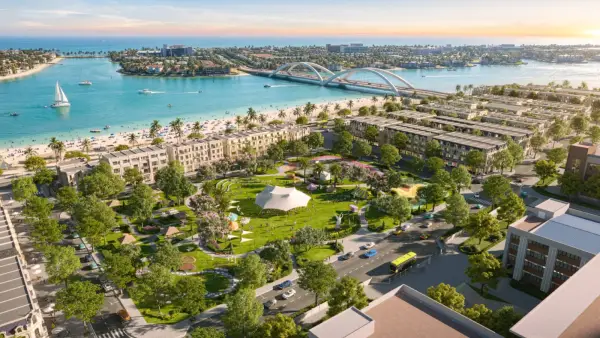
This strategy is not unique to India. Vietnam’s leading developer Vinhomes has built much of its success on the township model, with major projects like Vinhomes Green Paradise, Vinhomes Ocean City, and Vinhomes Hai Van Bay driving strong sales momentum. In the first quarter of 2026, Vinhomes reported contracted sales of VND81,700 billion, up 133 percent year-on-year, and an unrecognised sales backlog of VND201,600 billion, up 68 percent.
The shift toward mega-townships is increasingly visible in cities such as Bengaluru, Mumbai Metropolitan Region, Delhi-NCR, Pune, and Hyderabad, particularly along fast-developing infrastructure corridors. However, industry participants caution that these projects bring with them higher capital requirements, longer development cycles, and amplified execution risks, given the need to deliver roads, utilities, social amenities, and retail infrastructure alongside homes.
As developers continue to chase large land parcels and buyers show a preference for integrated living environments, the township wave looks set to redefine India’s residential real estate landscape in the coming years.
More Flips

Get real-time finance, business & capital market news in 50 words and get recommendations from top brokers delivered to your phone.


All Rights Reserved. Entroq Technologies Private Limited © 2022-2026