21/8/2026, 3:22:02 pm
Silicon Valley's robot bash had all the buzz, but classic clankers skipped out
Actuate, organized by Foxglove founder and CEO Adrian Macneil, demonstrates how quickly the robotics sector's fortunes have changed. The event debuted in 2024 with just 250 attendees, and numbers doubled the following year. This year, attendance tripled, and Macneil told Business Insider that organizers could have sold over 2,000 tickets if the venue permitted. Macneil noted that for much of the past two decades, robotics was perceived as a financial dead end by venture capitalists, but now the industry is attracting record levels of funding. Crunchbase data shows robotics startups secured $15 billion globally in 2025 and an additional $18.8 billion so far in 2026.
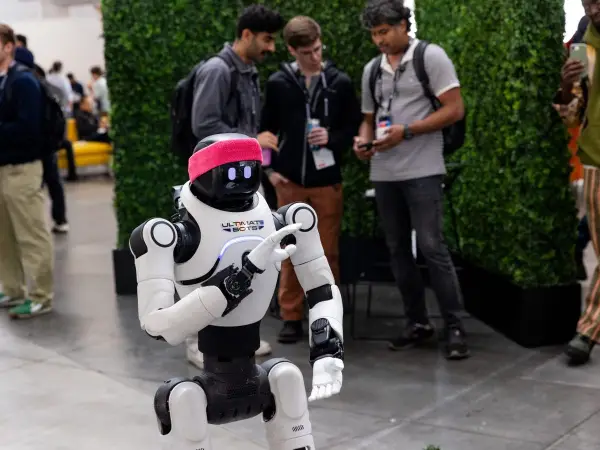
The phrase "physical AI" has become commonplace at these gatherings, reflecting the growing appetite for machines that perceive and act in the physical world. However, the rapid influx of capital and talent has not translated into an abundance of hardware. At Actuate, actual robots were a rare sight. Aside from a handful of robot dogs performing acrobatics and a humanoid named Abi blowing bubbles during Andromeda CEO Grace Brown’s talk, physical robots took a back seat to data-centric companies in the expo hall. Most vendors were selling services to help robotics firms gather and process the vast amounts of real-world data necessary for training robotic intelligence, a resource that remains alarmingly scarce compared to the massive datasets that fueled large language models.
The challenge of obtaining physical hardware intensified recently after the US Federal Communications Commission imposed restrictions on new foreign-made advanced robotic devices, affecting access to cost-effective Chinese hardware. Chinese firms accounted for about 90 percent of global humanoid robot shipments last year, making the US increasingly dependent on imports. Industry leaders voiced concerns about the impact of the restrictions. Sebastian Thrun, founder of Google’s self-driving car project, commented during an onstage keynote that the FCC’s move posed challenges. Fred Parietti, CEO of Multiply Labs, explained that while his company has shifted much of its supply chain to Europe, he still relies on Chinese-made humanoids for specialized manufacturing tasks, for which no US alternative exists.
Despite these constraints, spirits were high among attendees, many of whom are bypassing conventional tech jobs to build robotics startups. The conference atmosphere blended academic seriousness with startup exuberance - from panel discussions on “The Data Wars” to evening networking events featuring live DJs and lively robot competitions. The highlight was Robot Fight Night, where Chinese-made Unitree humanoids, one red and one blue, battled in the main hall, capturing the crowd’s imagination and spotlighting just how indispensable Chinese hardware remains to the field.
As funding pours in and public excitement grows, the robotics sector faces a paradox: plenty of money and ambition, but a shortage of the physical platforms needed to realize the next generation of “physical AI.” With regulatory hurdles and supply chain challenges looming, the question remains whether the industry’s new momentum can translate into tangible breakthroughs - or if the machines themselves will remain in short supply.
More Flips

Get real-time finance, business & capital market news in 50 words and get recommendations from top brokers delivered to your phone.


All Rights Reserved. Entroq Technologies Private Limited © 2022-2026