28/11/2026, 7:17:03 am
Massive limestone relics found by archaeologists in Alexandria's royal quarter
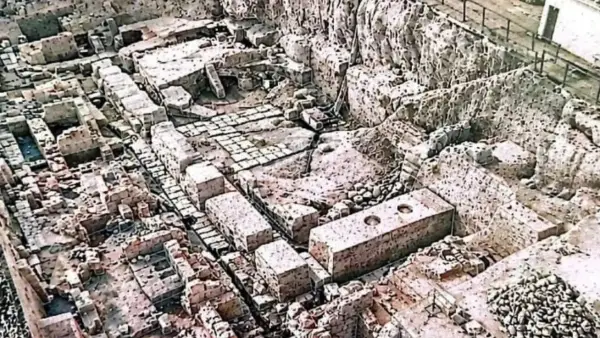
After the excavation report was submitted, Egypt’s Ministry of Tourism and Antiquities established a specialized scientific committee to assess the significance of the discovery. The committee, headed by Ayman Ashmawy of Egypt’s Supreme Council of Antiquities, included experts in Greek and Roman history and archaeology from top Egyptian universities. Their initial assessment pointed to the imposing scale and layout of the foundation, which is constructed from large limestone blocks and includes a square-shaped base with surrounding walls. A substantial tunnel extends northwards from beneath the foundation, leading some to theorize a funerary purpose for the site. The dimensions and strategic location have prompted speculation that the structure may be linked to the royal burial complex of the Ptolemaic rulers, and in particular Ptolemy IV Philopator, who reigned during the dynasty’s nearly 300-year rule of Egypt following the death of Alexander the Great.
Despite the excitement surrounding the discovery, Ashmawy emphasized that the royal tomb hypothesis remains preliminary. More archaeological investigation is required to establish the true identity and function of the structure, as well as its relationship to the nearby historical remains. Ancient sources, notably the Greek geographer Strabo in his Book XVII of Geography, described the Sema - a royal enclosure within Alexandria’s palace complex that was the resting place of the Ptolemaic kings and Alexander the Great. Such accounts have long guided the search for royal tombs within the city.
Alexandria’s complex archaeological landscape poses significant challenges for researchers. Much of the ancient city lies beneath modern infrastructure, while other parts have been lost to the sea. Both underwater and terrestrial excavations have gradually uncovered evidence of the city’s former grandeur, including palaces, harbors, and sections of ancient roads. In recent years, efforts at the Shallalat Gardens site have also revealed a Hellenistic statue believed to represent Alexander the Great, monumental public buildings, and a subterranean tunnel, enriching the understanding of Alexandria’s ancient topography.
The Bibliotheca Alexandrina’s Antiquities Museum recently highlighted these achievements in a statement about its exhibition, "Twenty Years of Excavations at Shallalat Gardens (2006–2026)," dated April 24, 2026. These discoveries have begun to piece together the fragmented history of Alexandria’s Royal Quarter.
As archaeologists continue to excavate and analyze the newly uncovered tunnel and its monumental foundation, hopes are high that future findings may shed definitive light on one of Egypt’s enduring archaeological mysteries. If confirmed, the structure could alter current understanding of the city’s royal heritage and the burial traditions of the Ptolemaic dynasty. Until then, Alexandria remains a city with stories still buried, echoing through its ancient stones and newly unearthed passageways.
More Flips

Get real-time finance, business & capital market news in 50 words and get recommendations from top brokers delivered to your phone.


All Rights Reserved. Entroq Technologies Private Limited © 2022-2026