14/8/2026, 3:20:02 am
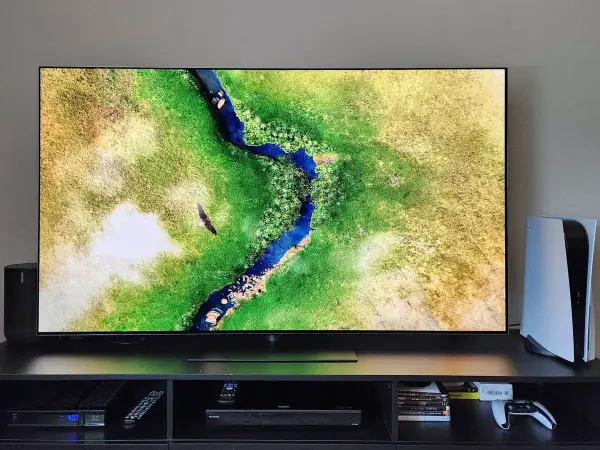
LG G5 OLED TV Review: Remains a Leading High-End Choice for the Price
The LG G5 distinguishes itself with the company's four-stack OLED panel, a design innovation that delivers a combination of perfect contrast, high brightness, sharp detail, rich color reproduction, and wide viewing angles. The G5’s image quality sets it apart from the mid-range offerings and brings it close to the technical capabilities found in the very best displays. While the Samsung S95H now surpasses the G5 in peak brightness and LG’s own subsequent G6 model boasts improved processing and reduced screen reflections, both of those alternatives carry higher price tags, making the G5 a particularly attractive option given its new discounts and continued wide availability.
Available in a range of sizes from 55 to 97 inches, LG's G5 is designed to serve a broad spectrum of living spaces. Except for the largest 97-inch variant, which uses a different OLED panel and doesn’t reach the same brightness levels, all sizes maintain consistent specifications. The G5’s “One Wall” design enables a flush wall mount, and the required bracket is included with purchase. However, LG does not provide a traditional pedestal stand by default, instead offering one for an extra $100, though the TV maintains an elegant profile whether mounted or standing.
A notable hardware advantage is the presence of four HDMI 2.1 ports, offering up to 4K at 165Hz. This is significant for gamers seeking high-refresh-rate performance from consoles and PCs, particularly as some competitors like Sony continue to offer only two HDMI 2.1 ports. LG has also redesigned its Magic Remote for the G5, making it thinner and more comfortable, though some users may find the lack of backlighting, dedicated input select, and mute buttons to be quirks in the otherwise improved design.
The four-stack OLED panel marks a leap over LG's previous WOLED screens, achieving a measured peak brightness of 2,410 nits in Filmmaker Mode with a 10 percent HDR test pattern - almost 1,000 nits higher than its predecessor, the G4. This high brightness contributes to a dynamic HDR experience, with highlights that stand out even in well-lit environments. LG’s picture processing allows for effective upscaling of lower-quality content and ensures uniform quality across the panel, though slight over-brightening in near-black scenes was observed in select content.
Despite its strengths, the G5 has some competition. Samsung and Sony’s flagship OLEDs, which utilize quantum dot technology, deliver marginally higher color volume, especially for bright colors. LG has improved in this area compared to previous models, but it remains a differentiating factor at the very top end.
As a gaming platform, the G5 supports features such as ALLM, VRR, and a Game Optimizer menu, plus refresh rates up to 165Hz - outpacing most rivals stuck at 144Hz. The TV also provides direct access to the Xbox app, enabling cloud gaming for Game Pass members, though performance depends heavily on a user’s internet connection.
The G5 runs on LG’s webOS, offering smooth navigation and access to major streaming services, though it lacks support for a few niche applications. In all, while not without small drawbacks, the G5 is praised for its combination of high-end image quality, gamer-friendly features, and current pricing, making it a compelling flagship option for consumers seeking top-tier performance without the premium cost of the absolute newest models.
More Flips

Get real-time finance, business & capital market news in 50 words and get recommendations from top brokers delivered to your phone.


All Rights Reserved. Entroq Technologies Private Limited © 2022-2026