17/8/2026, 2:21:03 pm
Jet, a California startup, makes headlines with its latest innovation
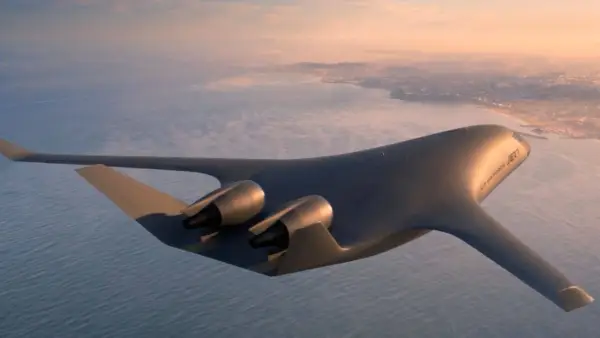
JetZero’s proposed Z4 aircraft stands out for its distinctive blended-wing-body architecture, a departure from the traditional tube-and-wing layout used by most commercial jets. This wide, flattened center section seamlessly merges with the wings, allowing more of the aircraft to generate lift and reducing aerodynamic drag. According to JetZero, this new shape is key to achieving a dramatic reduction in fuel use, with the company targeting 30 to 50 percent less fuel burn compared to today’s commercial aircraft. If realized, this leap in efficiency could slash both operating costs and carbon emissions - a major sustainability goal for the aviation industry.
The Z4 is projected to carry around 250 passengers across six cabin sections, each with its own luggage compartment. Instead of traditional side windows, the design utilizes high-definition screens displaying live external views captured by cameras, complemented by skylights near the front seats. The aircraft is designed for a range of approximately 5,000 nautical miles, roughly 9,200 kilometers, which would be sufficient for long-haul routes such as São Paulo to Madrid. JetZero’s goal is to fill a niche between large single-aisle jets and bigger twin-aisle aircraft, offering enough range for a significant share of medium- and long-distance services without requiring airlines to upsize to the largest jets.
While the concept of a blended-wing-body aircraft has been studied for decades, and prior demonstrators from Boeing, NASA, and Airbus proved the shape could be stable and controllable, none have crossed into commercial passenger service. JetZero aims to bridge this gap. The company plans to have a full-scale prototype airborne by 2027, with commercial operations targeted for the early 2030s. This development has drawn interest from leading US airlines, with United Airlines reportedly planning to purchase up to 200 Z4s, and Delta Air Lines and Alaska Airlines also supporting the platform.
Development is accelerating with support from major partners and government funding. In July, JetZero announced a $3 billion agreement with the US government to build a factory in North Carolina to advance its production capabilities. The US Department of the Air Force has also selected JetZero for a $235 million blended-wing-body prototype effort, seeing potential military applications in reduced fuel consumption, extended range, and more efficient cargo movement.
For airlines, the Z4’s promise lies not just in fuel savings, but also in its compatibility with existing airport infrastructure, removing the need for costly modifications to terminals or ground operations. Japan Airlines, which has joined the project, will provide expertise in operations, maintenance, and ground handling, and will help design future support systems.
JetZero co-founder and CEO Tom O’Leary said the aim of bringing the aircraft to market in the early 2030s aligns with airline goals for sustainable innovation and net-zero emissions by 2050. With major airlines and government agencies backing the project, and operational partnerships forming, the race is on to prove whether this futuristic design can deliver on its potential to revolutionize commercial aviation.
More Flips

Get real-time finance, business & capital market news in 50 words and get recommendations from top brokers delivered to your phone.


All Rights Reserved. Entroq Technologies Private Limited © 2022-2026