29/11/2026, 12:16:03 pm
How India’s cleanest city manages 750 tonnes of waste each day differently
The city’s victory is being celebrated with widespread fanfare. Posters proclaim the achievement across Navi Mumbai, and garbage collection vans broadcast the slogan “Nishchay Kela, Number Pahila” (We have decided on Number 1) as they circulate through neighborhoods, reinforcing the civic body’s push for cleanliness and public participation.
Navi Mumbai’s triumph in the Swachh Survekshan, which evaluated over 4,751 cities, was the culmination of a decade-long pursuit involving layered measures and consistent enforcement. The Navi Mumbai Municipal Corporation (NMMC) credits its victory to a mix of planned urban design, operational discipline, and community-driven waste management. Spanning 109.59 square kilometers and generating about 750 metric tonnes of waste daily, the planned city stands in contrast to larger cities like Indore, with 276 square kilometers and daily waste of approximately 1,115 metric tonnes, and Surat, with an average of 2,479 metric tonnes per day as of September 2026.
According to Dr Ajay Gadade, deputy municipal commissioner in charge of NMMC’s Solid Waste Management, visible cleanliness, sanitation access, and wastewater management were likely decisive factors in Navi Mumbai’s strong performance, although the Ministry of Housing and Urban Affairs has yet to release detailed score breakdowns. In particular, the city claims 100 percent daily treatment of its solid waste, with wet waste converted into compost and dry waste processed for recyclables and industrial fuel.
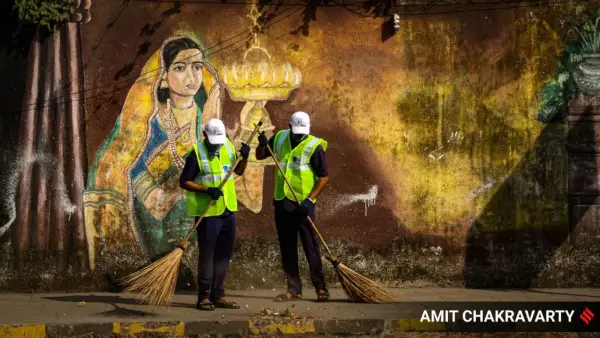
The operational backbone of Navi Mumbai’s cleanliness drive is a meticulously scheduled cleaning and garbage collection system. Streets begin to be swept at 6 am, with each safai karamchari (sanitation worker) assigned a specific stretch, and door-to-door waste collection covers both affluent residential hubs and the city’s informal settlements. Non-compliance with waste segregation is met with escalating measures, including warnings, cessation of collection, and penalties.
The command center for these efforts is the Integrated Command and Control Centre (ICCC), which uses real-time data from over 300 sanitation vehicles, RFID-enabled dustbins, and more, monitoring everything from route adherence to volume cleared. This digital oversight extends into the city’s slums through the ‘Zero Waste Slum Model’ launched in 2019, which shifted from communal bins to door-to-door collection and on-site composting by local women’s groups.
Navi Mumbai has also addressed otherwise overlooked waste streams with dedicated bins and launched the country’s first Textile Recovery Facility, Punarsutra, in 2025 in partnership with the Ministry of Textiles. This initiative has collected over 52.5 tonnes of post-consumer textile waste, transforming it into a wide range of upcycled products, and partnered with organizations like GreenSole for shoe recycling.
Water management remains another pillar, with the city treating 100 percent of its 260 MLD sewage output, reusing up to 30 percent of treated water for industry and landscaping. Broad-based awareness campaigns, particularly targeting children in schools, have been integral to changing citizen behavior, with documentation of more than 1,071 outreach programs over six months.
Despite these accolades, the city’s ‘Number 1’ status is not universally accepted by all residents. Those in older village pockets and industrial belts such as Turbhe and Rabale contend that the visible cleanliness promoted in core hubs does not extend equally to all areas. Some residents suggest gaps remain, especially in slums and gaothans, raising questions about the comprehensive impact of the city’s model.
Whether the model’s success can be fully replicated across the diverse landscape of Indian cities remains to be seen. However, Navi Mumbai’s recognition as India’s cleanest city highlights the powerful impact of integrated planning, technology, and consistent enforcement in urban sanitation.
More Flips

Get real-time finance, business & capital market news in 50 words and get recommendations from top brokers delivered to your phone.


All Rights Reserved. Entroq Technologies Private Limited © 2022-2026