9/10/2026, 11:24:02 pm
Global warming may benefit Russia while drawing NATO nearer to its borders
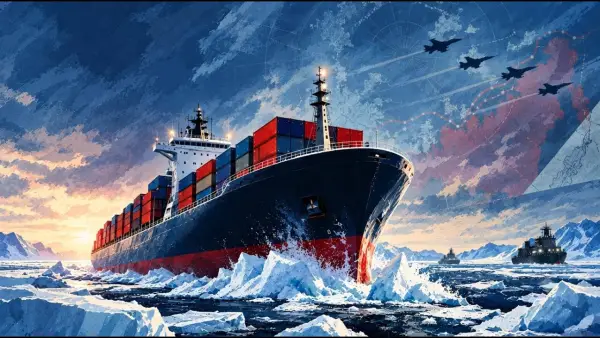
The Arctic is warming more than three times faster than the rest of the globe and may see its first nearly ice-free summer by 2030, according to the US Department of Defense’s 2024 Arctic strategy. As Arctic sea ice wanes, new maritime transit routes and access to undersea resources are altering the region’s strategic importance, with major powers positioning themselves for advantage. In 2025, commercial vessels made more than 100 voyages along Russia’s Northern Sea Route, moving over three million metric tons of cargo, the highest figure to date.
At the same time, the Arctic is becoming increasingly militarized. Seven of the eight Arctic states - Canada, Denmark, Finland, Iceland, Norway, Sweden, and the United States - are now part of NATO, with Finland and Sweden joining in 2023 and 2024. This has created a “NATO 7 vs Russia” dynamic, fundamentally shifting security calculations in the region. Russia, which holds the largest share of Arctic territory and has maintained the most advanced military presence there, has reactivated over 50 Soviet-era outposts since 2008 and bolstered its northern fleet near Murmansk, according to the Atlas Institute and IISS Military Balance 2025 data. Its Kola Peninsula hosts around two-thirds of its second-strike nuclear capability and is home to six of its 12 nuclear-armed submarines. The deployment of advanced S-400 missile systems to strategic sites such as Franz Josef Land and Novaya Zemlya, along with the world’s largest icebreaker fleet of 42 vessels, underscores Moscow’s commitment to the region.
NATO has responded with major investments, including the launch of “Arctic Sentry” in February 2026 to bolster deterrence and defense, the opening of a third Combined Air Operations Centre in Bodo, Norway in October 2025, and the establishment of Forward Land Forces in Finland in June 2026.
Greenland, situated between Europe and North America, has also emerged as a focal point of competition. US President Donald Trump intensified US moves around Greenland in his second term, publicly declaring US ownership and control over the island as “an absolute necessity” in December 2024. By September 2026, a trilateral security agreement between the US, Denmark, and Greenland was signed, allowing the US to modernize and expand the Pituffik Space Base and establish new defense areas.
For Russia, the changing Arctic environment opens both economic and environmental fronts. Melting ice could lower heating costs, expand agriculture, and enable lucrative Arctic shipping, but it comes at significant risk. The Russian Arctic has warmed by about 0.47°C per decade since the mid-1970s, roughly 2.5 times the global rate, according to the country’s submission to the UN Framework Convention on Climate Change. While ice retreat makes the Northern Sea Route more accessible, hazards including mobile ice, limited search-and-rescue infrastructure, and black carbon emissions remain.
Agriculture might benefit from longer northern growing seasons, yet poor soils and unstable ground limit gains, while Russia’s traditional farming regions face worsening heat and declining rainfall. Permafrost melt poses some of the gravest costs, threatening infrastructure used by 15 million people. Estimates suggest damages could reach $97 billion by 2050, with up to 69 percent of fundamental Arctic infrastructure at risk, according to the IPCC.
The economic threat of global decarbonization also looms large, as declining fossil fuel demand could destabilize core revenues. The World Bank sees Russia’s better prospects in diversifying toward renewables and low-carbon industries.
Russia is not alone in eyeing the evolving Arctic. India, positioned as an observer in the Arctic Council, has outlined an explicit Arctic Policy since 2022, focusing on research, governance, and potential shipping alternatives like the Northern Sea Route. Although further north and physically challenging, the route could prove vital should traditional corridors like the Suez Canal or Red Sea face disruption.
Looking ahead, the opening of the Arctic may offer Russia select economic and geopolitical gains, especially in shipping and select agriculture, but mounting environmental and macroeconomic risks temper
More Flips

Get real-time finance, business & capital market news in 50 words and get recommendations from top brokers delivered to your phone.


All Rights Reserved. Entroq Technologies Private Limited © 2022-2026