5/11/2026, 9:23:03 pm
Ex-Apple and Uber engineer secures $51M to innovate self-driving trucks
Cohen, whose background includes stints at Apple’s now-disbanded autonomous car project, Uber’s autonomous unit, and self-driving trucking firm Waabi, founded Humble last year. He is betting that designing the truck and its self-driving system together, rather than adapting vehicles made for human drivers, will yield a more effective and efficient product. It is a compelling argument in a sector that has seen both massive investor interest and repeated setbacks.
Despite the influx of capital, Humble has not yet begun commercial freight operations. Cohen said the company will start customer pilot programs in the first quarter of 2027 using conventional trucks to gather real-world data. Those routes will then be recreated in virtual environments to further test and refine Humble’s autonomous system before the company deploys its proprietary vehicle, the Humble Hauler. Commercial operations are targeted for the third quarter of 2027. While Humble currently holds a California permit for testing its vehicles with safety drivers, it will need to secure further regulatory approvals to test and deploy without a human driver or to launch commercial service in the state.
Humble is focusing its efforts on regional routes typically under 250 miles, connecting key freight nodes like ports, warehouses, and distribution centers. According to federal data, 87% of all goods shipped by truck in the United States in 2021 traveled less than 250 miles. Cohen argues that freeing drivers from short, repetitive, and often undesirable shifts could alleviate the industry’s chronic labor shortages, allowing people to focus on more valuable or flexible work.
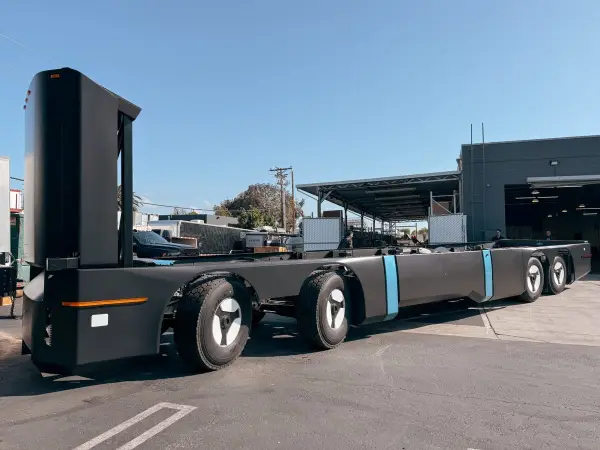
The company’s distinctive autonomous truck, still in prototype phase and temporarily fitted with a cab for testing, is being trialed at a former dynamite factory near San Francisco, managed as an R&D site by UC Berkeley. During a recent demonstration, the vehicle navigated stop signs, wildlife, and foot traffic. The finished Humble Hauler is expected to resemble a massive, cabless skateboard capable of carrying 40-foot shipping containers.
Self-driving trucks were once forecast to become commonplace ahead of robotaxis, given the comparative simplicity and predictability of highway driving. Yet, the high stakes of autonomous freight - where a single error with a fully loaded truck could have severe consequences - have kept many companies in extended testing. Industry counterparts such as Aurora and Kodiak AI are beginning to roll out their commercial services in select U.S. markets, with humandriver support on certain route segments.
Looking ahead, Cohen envisions an entire family of autonomous vehicles to accommodate different cargo types and logistics scenarios. Humble has already drawn talent from leading automation-focused companies including Tesla, Waymo, and Cruise. For now, the company is focused on tackling the complexities of messy, real-world environments and regulatory hurdles to bring a new generation of freight vehicles to America’s roads.
More Flips

Get real-time finance, business & capital market news in 50 words and get recommendations from top brokers delivered to your phone.


All Rights Reserved. Entroq Technologies Private Limited © 2022-2026