16/9/2026, 11:23:02 am
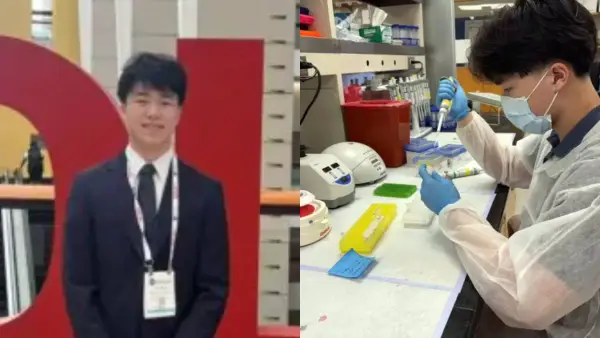
Austin Jin, 16, develops a CRISPR-based blood test to detect tuberculosis
Tuberculosis (TB) remains one of the most persistent and deadly infectious diseases worldwide, causing over a million deaths annually. One of the key challenges in combating TB lies in accurately diagnosing the disease. Traditional methods typically analyze sputum, the mucus found deep in the lungs, to detect infection. This method, however, poses difficulties for many patients, especially young children, the seriously ill, or those who are immunocompromised, as they may struggle to provide an adequate sample.
In contrast to existing approaches, Jin’s project focuses on blood serum, screening it for circulating fragments of bacterial DNA. The M-CATCH system employs polymerase chain reaction (PCR) alongside CRISPR-Cas12a technology to find genetic markers indicative of tuberculosis. More than merely detecting the presence of TB, the test is also designed to identify specific genetic changes that confer drug resistance to the bacterium. This level of precision, sometimes down to a single DNA change, is made possible by Jin’s engineering of highly specific CRISPR guide RNAs, paired with a microfluidics chip capable of running multiple reactions simultaneously.
The result is a multiplexed platform that enables screening for hundreds of mutations at once. This development holds potential for bringing large-scale TB testing to regions lacking sophisticated laboratory infrastructure, which could prove critical in the ongoing battle against the disease.
Jin’s journey was not without setbacks. Designing effective guide RNAs proved challenging, as many promising candidates failed in experimental trials, necessitating weeks of testing and adjustment. Looking beyond tuberculosis, Jin intends to major in biomedical engineering and biochemistry, with hopes of becoming a physician-scientist and translating laboratory innovations into clinical practice.
Outside the laboratory, Jin leads both his varsity swim team and DECA chapter, and co-founded Project LIFE, a student-driven initiative that now boasts over 20 chapters across eight states, dedicated to promoting education and bone marrow registry access.
The versatility of the M-CATCH platform suggests even broader applications in the future, potentially allowing detection of a variety of infectious diseases, and perhaps even cancer, from a single blood sample. Jin’s work may signal a future where accurate, large-scale diagnosis is feasible even outside advanced medical settings.
More Flips

Get real-time finance, business & capital market news in 50 words and get recommendations from top brokers delivered to your phone.


All Rights Reserved. Entroq Technologies Private Limited © 2022-2026