18/8/2026, 6:23:02 pm
Indian-origin mom's $1.7B school transport startup is changing U.S. student lives
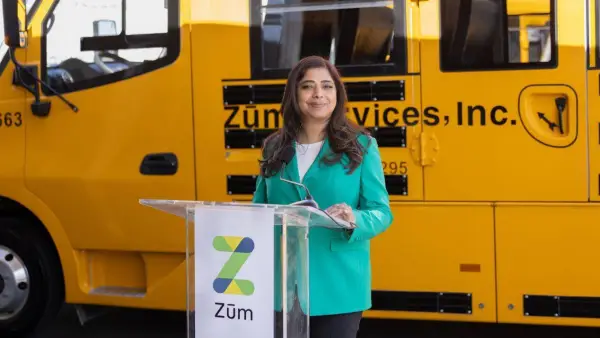
Narayan founded Zum in 2015 with her brothers, Vivek and Abhishek Garg, in Redwood City, California. Zum set out to modernize the student transportation industry using technology, enabling parents and teachers to track buses via apps connected to GPS and onboard tablets. By leasing bus yards, acquiring buses and small shuttles, and hiring drivers, Zum has offered both physical and digital solutions to schools seeking more transparent and efficient transportation.
The company’s model quickly found traction, evolving from a ride-share service for children into an enterprise platform that addresses district-wide transportation needs. The shift allowed Zum to systematically analyze and optimize routes, enhancing efficiency and reducing costs for school systems. Since its launch, Zum has raised $430 million and is now valued at $1.7 billion. In 2025, reported revenue climbed 35% from 2024 to $333 million, with contracts spanning 5,000 schools in 18 states, according to the company.
Investors like Ulu Ventures, backing the company since 2016, were drawn by both the scale and complexity of the US school transportation market, which annually spends nearly $40 billion yet still faces disjointed approaches, shortages, and logistical hurdles. Zum’s CEO Ritu Narayan was included in the 2026 Forbes 50 Over 50 list for her efforts scaling the startup into a national player.
Zum’s platform deploys artificial intelligence to streamline bus routes, offers real-time digital tracking, and aims to reduce fleet size while improving on-time arrivals. For example, its five-year, $150 million contract with San Francisco Unified School District led to the district cutting its fleet from 236 to 193 buses, saving $3.5 million annually, Narayan reports.
The company is also advancing electrification, addressing both environmental sustainability and rising costs. With fewer than 2% of the nation’s 500,000 school buses currently electric, Zum’s initiative in the Oakland Unified School District stands out as the first in the country to fully electrify its fleet. Since August 2024, Zum has enabled all 74 Oakland buses to participate in vehicle-to-grid charging, collectively supplying 1.9 megawatts of power to the electrical grid in just the first five days of operation. Narayan told GIC in April 2025 that the goal for the year is to deliver 2.1 gigawatt-hours, enough to power hundreds of homes in Oakland.
Despite higher initial costs compared to traditional providers, Zum’s technology delivers long-term savings and operational benefits for schools. This transition is especially clear in places like Oakland, where prior to Zum's involvement, student pickup changes and late buses were managed with outdated tools like fax machines and phone trees.
Narayan believes national expansion is imminent as school districts across the country take note of Zum’s impact, describing word-of-mouth momentum that follows each new district contract. As school systems increasingly look to modernize their transportation logistics, Zum’s data-driven approach and push toward student-safe, environmentally friendly options position it at the center of industry transformation.
More Flips

Get real-time finance, business & capital market news in 50 words and get recommendations from top brokers delivered to your phone.


All Rights Reserved. Entroq Technologies Private Limited © 2022-2026